
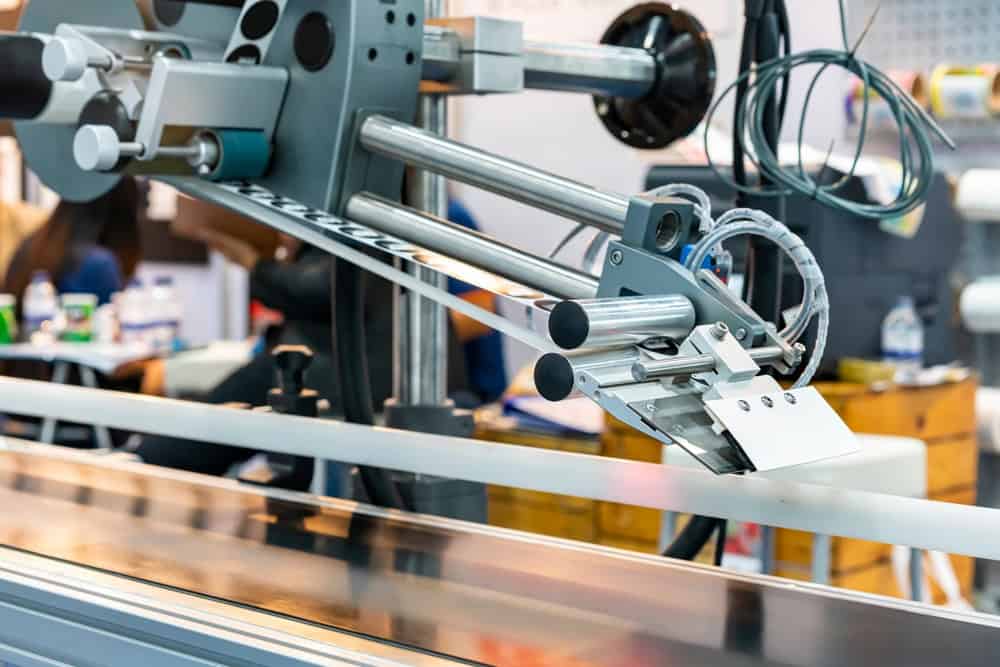
Listen, you need to understand something right now: an automatic labeling machine is not just another piece of equipment sitting on your factory floor collecting dust and taking up space. It is the difference between running a legitimate industrial operation and playing pretend in some half-baked garage setup that cannot keep pace with the brutal realities of modern manufacturing. You either get serious about automation or you watch your competitors steamroll past you whilst you are still peeling and sticking labels like some cottage industry holdover from the nineteenth century.
The Raw Truth About Speed
Let us talk about what these machines actually do, and why they matter in Singapore’s unforgiving industrial landscape where space costs a fortune and labour does not come cheap. Singapore suppliers note that automatic labeling systems feature programmable PLC control, photocell detection for targeted positioning with great accuracy, and adjustable labeling heights and angles. These are not toys. These are precision instruments that can label anywhere from 100 to over 1,000 products per minute depending on configuration and product type.
Think about that for a second. One thousand labels per minute. Your fastest manual operator, working flat out, might manage 20 bottles in 60 seconds if they are exceptionally talented and hopped up on caffeine. The machine does not need coffee breaks, does not call in sick, does not slow down after lunch, and does not make mistakes because their mind wandered for half a second.
The Economic Violence of Manual Labour
Here is where it gets brutal. Every misaligned label is money thrown in the bin. Every crooked sticker is product you cannot sell at full price, if you can sell it at all. Manual labeling is a bloodbath of inefficiency, a slow hemorrhage of profit that most manufacturers do not even properly account for until they run the numbers and realize how much they have been losing.
Automated labeling systems eliminate that carnage. The machines apply labels in exactly the same position every single time. The sensors detect gaps between labels, the servo motors adjust with millimetre precision, and the whole operation runs with a consistency that no human being could possibly match over an eight-hour shift, let alone round-the-clock production runs.
What Singapore Manufacturers Actually Need
In Singapore’s high-cost environment, you cannot afford to mess about. The industrial space you are renting costs serious money. The labour you are paying costs serious money. Everything costs serious money, so your production better be generating serious returns. An automatic labeling system delivers that return through several distinct advantages:
- Throughput that manual operations cannot touch: machines handle hundreds to thousands of products hourly whilst maintaining perfect placement accuracy
- Labour reallocation: operators move from repetitive sticking tasks to quality control, machine monitoring, and other activities that actually require human judgement
- Material waste reduction: precise application eliminates the crooked labels, bubbles, and misalignments that force you to bin perfectly good product
- Regulatory compliance: pharmaceutical and food manufacturers need batch codes, expiry dates, and other mandatory information applied correctly every time without fail
- Integration capability: modern systems connect directly to production management software, tracking output and flagging issues before they become costly problems
Semi-Automatic Versus Full Automation
Now, not everyone needs to jump straight to a fully automated line. Semi-automatic labeling machines still require human operators to position products and initiate cycles, but they eliminate the actual application guesswork. These systems suit medium-volume operations or facilities handling frequent product changeovers where complete automation might prove excessive.
But make no mistake: if you are running serious volume, full automation is not optional, it is mandatory. Automatic labeling machines deliver production speeds ranging from 1,800 to 120,000 labels per hour, ensuring precision within a millimetre using advanced sensors and servo-driven applicators. That kind of performance transforms production economics entirely.
The Technical Reality
Modern labeling equipment incorporates technology that would have seemed like science fiction a generation ago. Optical sensors detect products at speeds exceeding 3,000 items per minute. Motors operate at 1,000 to 3,000 RPM, applying labels within one-second timeframes. Digital interfaces allow operators to adjust settings, store multiple product configurations, and monitor performance in real-time.
The machines handle round bottles, flat panels, odd-shaped containers, top and bottom surfaces, and everything in between. They work with self-adhesive labels, shrink sleeves, wrap-around applications, and print-and-apply systems that generate variable data on demand.
Industries That Cannot Function Without Them
Food and beverage manufacturers need these machines to keep production lines moving at speeds that meet market demand. Pharmaceutical companies require them for regulatory compliance and traceability. Cosmetics brands depend on them for the flawless presentation that premium products demand. Chemical manufacturers use them to ensure safety information appears correctly on every container.
The logistics sector relies on automated labeling for shipping, tracking, and inventory management. Electronics companies use them for serial numbers and compliance labels. Every major manufacturing category has discovered the same truth: manual labeling is obsolete.
The Bottom Line
You want to know if an automatic labeling machine makes sense for your operation? Here is the test: calculate what you are losing to mislabeled products, wasted labour hours, and throughput limitations. Add up those costs over a year. Now compare that number to the investment in automation. The mathematics is not subtle. The machine pays for itself, then keeps delivering returns whilst your competitors scramble to keep up with manual methods that belonged to a different industrial era. This is not optional equipment anymore. This is infrastructure, as essential as power and compressed air, and pretending otherwise just means you are lying to yourself about how serious you actually are about manufacturing. The automatic labeling machine separates the professionals from the amateurs, and that separation happens fast.
 News Reel Blog